I am, at my artistic best, worth £27.61
By Cliff McNish
In 2020, after publishing sixteen children’s and YA novels, some of which had been commercially successful, others not, I felt as if I’d reached almost a dead end.
Many reasons for this, but I think the main one was that I felt (like so many of us) a crushing lack of recognition compared with the year-on-year effort I’d put in.
My ego (which I’m very grateful for, which cares about me exclusively) helped me out for a while, blaming my unhappiness on plot tangles related to specific projects or temporary emotional/life issues.
And thank goodness for its charity, because where else was I going to get a boost to keep going? Money? Publishers pay their authors as richly as they can, but most of us don’t have pillows exactly stuffed with cash, do we? The average payment for a poem or short story nowadays rarely covers the cost of a medium-sized coffee, let alone fills a supermarket trolley with the alcohol and biscuits I need to keep going. An example (as if you needed one): I am in an anthology this year of around 15 stories which happens to be the most prestigious in horror fiction. For that I am being paid exactly £27.81.
We accept this as the price for our freedom to pursue art, of course, and that’s fine, but the poor renumeration over time means that the lack of recognition can become crushing. Not that we should be surprised by it. After all, we’re constantly being measured against the very best in the entire world. Moreover, (and this does seem the unfair part) we are also competing for attention against the dead best authors in the world, too. Being (in one of my incarnations) a literary writer, I accept contending for recognition with contemporary luminaries like Margaret Atwood, David Mitchell, Claire Keegan etc. And when I write horror fiction or fantasy or SF, I similarly accept that Stephen King, Justina Robson and many other current superb authors will loom over me, as will the large shadows of J. K. Rowling, David Walliams, Suzanne Collins and so on when I pen children’s and YA fiction. But did I really sign up to be competing for space in libraries and on bookshop shelves and in discussion groups with James Herbert, H. P. Lovecraft, Charles Dickens, Jane Austen, John Keats, Roald Dahl and Enid Blyton?
This bizarre quirk of our profession does not happen in standard careers. Before I started writing, I worked as a project manager in computing for 20 years. It was highly pressurised work, I was never my own boss, and I didn’t give a stuff about most of the projects I worked on (it’s really hard getting excited about implementing purchase ledger systems). But at least I was not measured against Bill Gates or Steve Jobs, let alone the long-deceased Charles Babbage or Alan Turing.
I was in fact only measured against the other project managers in my company. This was a small pool of people, most of whom could comfortably fit around the office coffee machine. In fact, it was really a smaller subset than that since I did not personally know all of the other managers that closely, and often knew their work even less well. Hence, my ego stayed pretty intact most of the time. And I got decently paid. And sometimes … hey-ho … bonuses! Usually those little bundles of cash arrived in time for Xmas, and not even for anything I’d achieved personally. All I’d had to do was turn up at my desk that year in my profitable company. Imagine it, guys: picture it: the artistic industry decides we all damn well deserve an annual bonus just for being part of the profession.
And yes, most of these complaints of mine can be rectified (since we authors are naturally humble people, of course) by just a tad more recognition and just a teeny-weeny, incy-wincy bit more financial reward once in a while. But what if the best result achievable by 98% of writers is that you are accepted as a decent craftsperson, with an individual voice, but you do not sell very well commercially or have your words really talked about? Well, OK, but it means you have to go on year after year borrowing on those shrinking reserves of self-worth.
Which is hard. And yes, we may have writerly friends to help us, but basically (unlike most forms of work, where there is some group responsibility) if our novel/story/poem does not sell or even get mentioned even when it does appear, we tend to blame ourselves. Yes, we bitch about poor marketing budgets/not enough publicity etc, but we secretly (at least when our ego is hurting) think that publishers/magazines spend only on those they think are going to sell, and anyway WOM is the biggest selling point, so if we don’t achieve decent sales (or our work barely gets mentioned even when it is published beyond a footnote), it feels like our fault, even if the reasons often lie entirely outside our control.
And much of what we write never sells at all, of course. Is never seen by anyone.
And we have to live with that.
Which understandably leaves us in a tricky psychological place.
So the astonishing thing, it seems to me now I’ve reached my third decade of writing, is that we keep going at all. Why do we? And the answer seems to be simple enough: because we love writing when it’s going well, and because it’s usually us at our best, our smartest and wisest and our most beautiful and most sensitive.
And that’s why this piece ends optimistically. Because every time we write something worthwhile we’re doing the above. We’re enacting in fact little acts of love. Sometimes that’s only self-love, and no one else cares, but so what, it’s still love. Whether we have success or not, part of our day or our week is dedicated to fresh small acts of devotion to form, to poetry, to plot, to theme, to art, to ourselves, and we offer the results of all this as gifts, mostly freely, to everyone else.
Interestingly, since 2021, focusing as I do now on writing poetry and short stories, not exclusively novels, I’ve felt a sharp upswelling of generosity towards our craft. My playfulness is back, even if, as in Stone Lions, my story here, there’s a dark undercurrent.
Our profession pays most of us virtually nothing, it often barely recognises us at all, but I still think it gives us, if we’re honest – and if our egos can hold our hearts tight through the difficult times – more than we ever really expected at the outset.
AUTHOR BIO
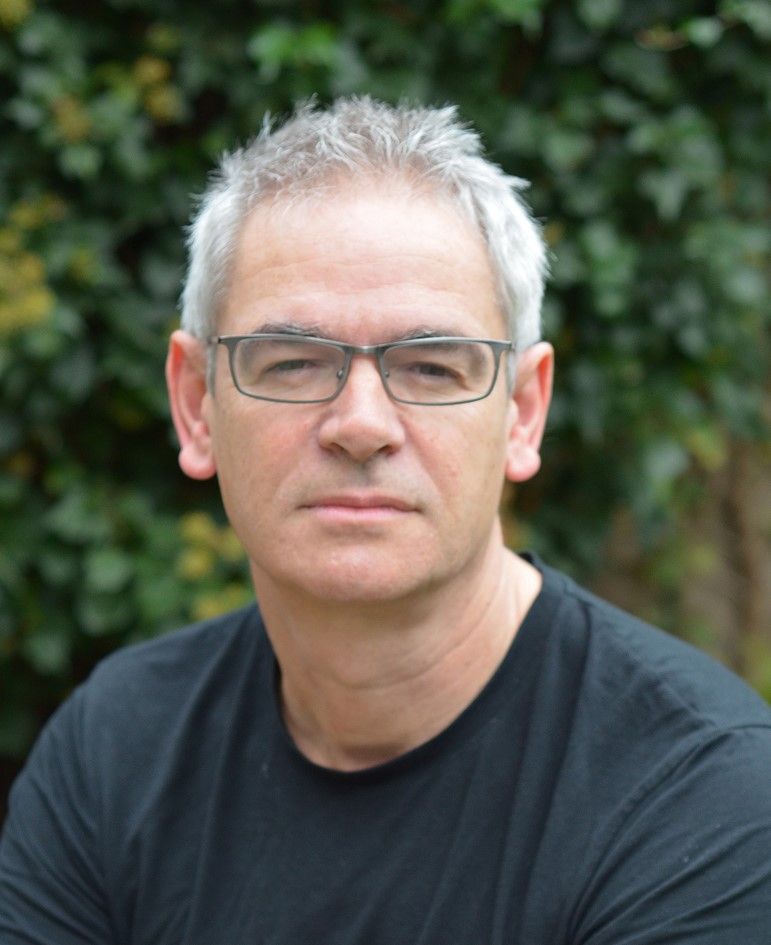
Cliff McNish‘s middle-grade fantasy novel The Doomspell is translated into 26 languages, and his ghost novel Breathe was voted by The Schools Network of British Librarians as one of the top adult and children’s novels of all time. Amongst other places, his adult stories and poetry have appeared in Nightjar Press, Stand, Confingo, Ink Sweat & Tears, The Literary Hatchet and The Interpreter’s House. Facebook: cliff mcnish; Instagram: @cliffmcnish


 Angry Gable Press