
Promoting Like a Punk
By Matt Brandenburg
Back in the 90s it could be hard to discover a new band. You didn’t have Spotify (gross), Apple Music, Bandcamp, or social media. If it wasn’t on the radio, MTV, or you didn’t have an older brother or friend, or live in a big city, you probably didn’t know about the ton of smaller bands out in the world. On the flipside of this, how did those bands reach an audience? How did they get fans and sell their music?
How did they reach me—a teenager that didn’t have an older brother, only had MTV for a little while, and didn’t live in a big city. I had friends, and I had CDs. In 1995 I saw Rancid on Saturday Night Live, which influenced me to buy …And Out Come the Wolves. And from that one purchase, an entire world of punk music opened up to me. A world that would never be on TV or the radio. A world that would be in the corner of the music store in the mall. A world that handled mostly through mail order and mixtapes.
That world opened to me through the Special Thanks section of that Rancid CD.
I’ve been thinking about that section a lot as I republished my first book and started working on my second one. We have so many channels to promote our work, maybe too many. And those channels run at the speed of lightning. As soon as you post about your new book, it’s already buried under a thousand new posts. Then, there’s the constant fear of a channel shutting down or discovering it’s run by Nazis. How can we reach that person that isn’t constantly online? How do we reach that person that doesn’t have an older brother or live in a big city? What do we do if social media implodes and we don’t have that option to promote our books? How do we open up the world of indie horror?
I listened to …And Out Come the Wolves constantly. I’d sit in my room with the CD booklet reading lyrics. On the last page were band pictures, what they did, and a Special Thanks section. A list of bands they’d played shows with, were friends, or partied with. All of them were new names to me. But, if Rancid liked them, I assumed I’d like them. The next time I was at the mall, I asked the cashier if they had any of the bands. They did, and I was able to scrounge up enough money to buy Pulley’s Esteem Driven Engine, which then led me to Pulley’s Special Thanks section, and to more bands, and to more music. Soon after that, I was getting record label catalogs, zines, and discovering even more bands. I started going to shows, started buying more of their CDs, and stopped looking to the radio or MTV for new music.
Why can’t we do this with our books? They didn’t need social media. A small punk band didn’t have to worry if their new release was going to be lost in the sea of posts. Sure, it might have been a slow sale, but it was still a sale. And I was more apt to buy older releases as well as new ones. The most important thing was their name was on my list, and something I hunted down, something that I would buy at the store. Now, imagine this for your favorite writers.
I know it didn’t cost the record labels anything to include a list of band names. It certainly wouldn’t cost a publisher extra to include fifty words at the end of an acknowledgments page. That’s at most twenty-five authors getting a mention in your book that’ll last forever. Twenty-five potential new names for a reader to discover. Every time someone reads your book, they’ll see those writers. Every time someone promotes your book, they are also promoting everyone you added. And if those books also added a list of writers, the number of people discovering someone new is exponential. All it’ll cost is a few minutes and some space in your book. The collective shout is a lot louder than a single cry.
We can’t guarantee a reader will look up all of those names. They may only look up one or two. We also can’t guarantee they’ll buy another book. But they might. Reading that name you mentioned might stick in their head and come back to them when they are searching for something new to read. They can also easily find the name at any time, as long as they have a copy of the book. We won’t have to worry about social media going away, or a reader trying to remember which platform had a post from a month ago.
The Special Thanks weren’t just for friends or labelmates. They might have played together at a show, they might have helped find a new venue, they might have shared equipment or studio space. It was a space to lift others up. Because the punk ethos is not about being better or pushing other bands down so you can get more. It’s about supporting each other, fighting against the establishment, doing it yourself, and getting yours and the underrepresented voice out into the world. The bands used their platform to help others, and they knew there were others like me, others discovering new music to listen to and enjoy.
Follow this for the names you pick. Think about the writers that you admire, that you’ve read, writers that tabled with you, the marginalized writers that don’t have your reach.
This is my call to action to writers and publishers. Use those fifty words to lift others up. The horror community is a lot bigger than we know. Everyone is already familiar with the popular writers; this is the opportunity to highlight a new name. Maybe your book is on the shelf at Barnes & Noble, maybe it’s a bestseller, maybe it’s all people are talking about. That’s a lot of eyes on your book and those names. A lot of potential voices to help spread the word. Mention your friends, that’s totally cool. But also use that space to help someone who wrote a book you liked, an underrepresented person, a writer that hasn’t broken through yet. Someone who might not ever get the chance to see their book on the shelf of a chain bookstore. If you are thinking about who you’d add and none of them match those criteria, make it your mission to discover someone new yourself. Now is the time to share your success and the attention you get by making room on the stage for someone that hasn’t made it there yet.
Remember, we’re being punk here. It’s not just five bands that make up the genre. The same for horror. It’s not just five or ten writers. We’re all in this together, and we can all lift each other up, we can lift the community up.
AUTHOR BIO
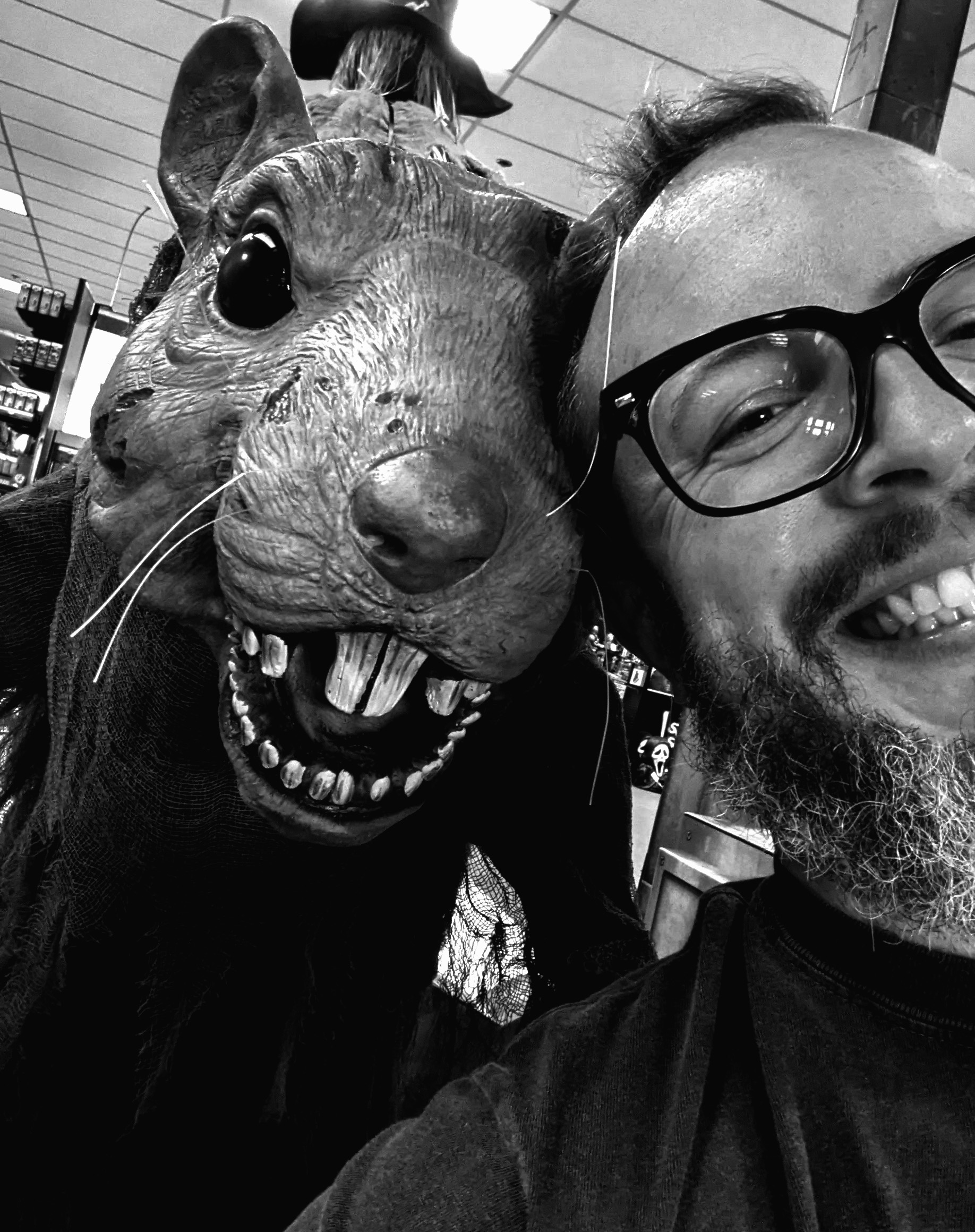
Matt Brandenburg is a horror writer living next to a moldy pumpkin patch in Kalamazoo, Michigan. He is the author of …And Out Come the Toys and The Dogmen Fudge Incident. You can find some of his short stories in Archive of the Odd, 34 Orchard, Novus Monstrum, and Tales to Terrify. He is also a cohost on the podcast Staring into the Abyss. When he’s not writing cartoonish horror, he is usually listening to horror movie scores, watching goofy movies, or playing with Lego. Find him on Bluesky and his website matt-brandenburg.com.


 Angry Gable Press