Cozy with the Apocalypse
By Rachel S. Cordasco
Published October 19, 2026
I think about “the apocalypse” a lot. This isn’t new, though. For some reason, since I was old enough to understand what I was reading and watching, I worried about the end of the world. Often, I would come to my mom, terrified, wondering if she thought the aliens were going to come soon to take over the world, if they would be really mean, and if they would take any of my stuff. I worried that asteroids would smack into the earth and turn us humans into nothing more than a planetary memory. Come to think of it, perhaps my worries weren’t so inexplicable. I grew up in the 80s and 90s, right in the middle of the alien invasion/abduction craze on tv and film—this stuff was on tv all the time. Since my parents kept the news on during the evening, I probably heard something about an asteroid coming within a comfortable margin of the Earth every so often.
And then there were the lessons in school about the hole in the ozone layer and greenhouse gases. Those sent me home in tears; it would take my mom a while each time to calm me down and reassure me that no, we’re not “all gonna die.” And don’t get me started on that History Channel (?)special on Nostradamus predicting the end of the world in 2000. That conveniently aired in 1999. Y2K? I spent months mentally preparing myself for what my family and I would do when civilization collapsed. Should we gather up some canned goods? Could we convert our basement into a shelter? Why did my parents not seem worried about this? Though she tried to hide it, I sometimes caught my mom in a tired eyeroll, and I didn’t blame her. No wonder she seemed so happy that I liked to read. It kept me busy and cut down on all the questions.
Those books, though. Some of them actually made me more anxious, but by the time I was a teenager, I had read enough to know that “apocalypse” often didn’t mean the end of everything. Sometimes, in these texts, it was already in the past; sometimes it happened in the middle of the book, and life went on. Perhaps I loved watching Star Trek: TNG so much because the collapse of civilization, the destruction, the catastrophe, was in the past. The show demonstrated that not only could life go on, but everything could be so much better than before. Sure, the world was a mess for a couple of centuries, but then, according to the show, we got warp drive and spaceships and Jean-Luc Picard. Humans could even survive Borg attacks. What a reassuring story. I couldn’t get enough of it. I still think about it often and use its lessons and images sometimes when I’m trying to teach my kids about living in the world and what the future could look like. They tried to watch episodes of TNG but found it too slow. I hold out hope that, one day, they will find their way to watching it straight through (and then watch it all again a few more times), like I have.
So while some people watched the nearly-forgotten, quickly-cancelled show (R)evolution (2012-2014) or the more recent Invasion (2021 -) and Silo (2023 -) for entertainment, I watched them while taking mental notes (obviously, there are many more shows depicting apocalypse, out just in the last ten years. These are the three I was able to watch). (R)evolution was especially useful because it included extended scenes about what happened not too long after the power was out for good. The stores were looted, people hid in their homes, they fought one another for scarce resources. Communications were out, and everyone had to rely on themselves and a few trusted allies and friends. I spent several days after the show was cancelled researching the “prepper” life and talking to my husband about how we would prepare for apocalypse. Like my mom, he would roll his eyes and tell me to calm down. I could see, though, that he had started thinking about it, too. We definitely keep more non-perishable food in the house since we watched (R)evolution.
I move around the world, working, doing errands, acting as my family’s private chauffeur, and I think about how I am mentally nearly-prepared for if the apocalypse hit. No more internet, no communications, no one coming to save us. Honestly, even when an appliance in our home goes out (as it did recently), I jump to high alert, anxiety level spikes, and I think, what are we going to do?!?! Then we find a way to fix it or find someone who can. It’s 2026, but still, not everyone can do this. I think a lot about how fortunate those of us are who have appliances, running water, and people who can not only fix things that break but will come to our house to fix things that break.
I’ve thought recently about going back to school, not for English literature this time, but to learn how to fix things. My husband thinks I’ve gone insane but I’m dead serious. When the apocalypse comes, no one is going to give a flying rat’s derriere that I know all about American literary realism or speculative fiction in translation. They’re going care that I can fix a toilet or find potable water or start a fire. I’m beginning to think that my mom should have put me in Girl Scouts. I bet that would’ve been exactly what I needed. Instead I read a lot and learned piano. All lovely things. But not useful when you’re dealing with the apocalypse.
A broken traffic light, produce missing from the shelves at the grocery store (with those irritating little signs that say, “sorry, hopefully they’ll be back soon!”)—I’m not kidding, my mind immediately goes to “oh no, it’s starting. This is the beginning of the end.” My rational mind then turns to my lizard brain and says “oh my god just shut. up. already), and I tell myself it’s ok, things break, supply chains get interrupted. For God’s sake, we lived through the early days of Covid when everyone ran out to buy toilet paper, and we didn’t know how bad things were going to get. And yet, we could still communicate with one another. TVs and computers and phones worked. We were still able to have meetings. Kids could still get some semblance of school if the schools provided materials and computers. Those who couldn’t stay home kept the world running. They looked in the face of the apocalypse and kept going.
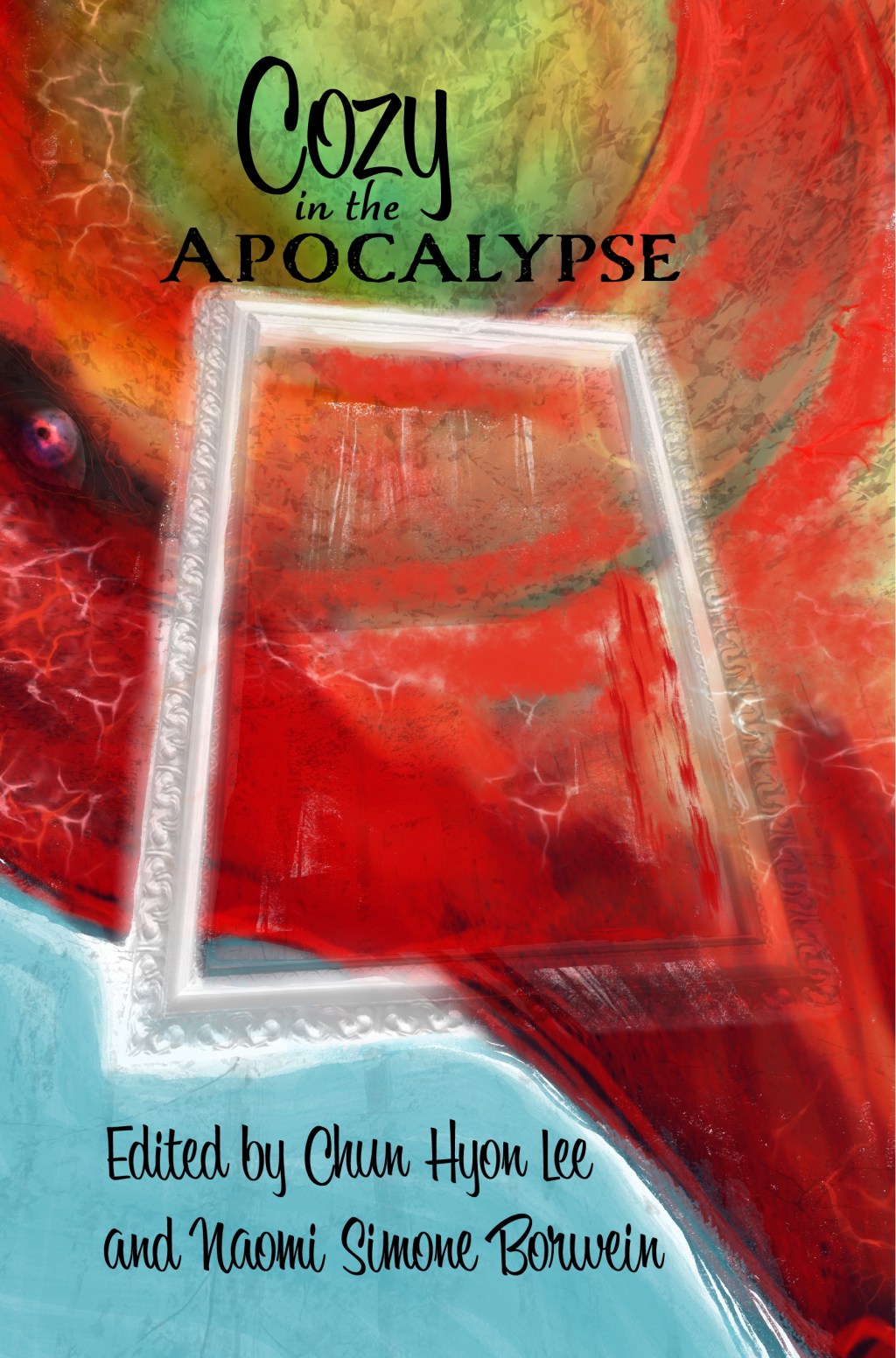
So when I saw the prompt for Angry Gable Press’s Cozy in the Apocalypse anthology, I was ready. The story seemed to flow from my fingers, fully formed. Sure, the world outside is falling apart, but this small, scared, determined group of people holed up in a café keep going as best they can. They’re hiding from that world, though, like most of us would. It takes one woman who is somehow immune from the fear to force these café-dwellers out of their safe cocoon and back out into the world to start helping children reunite with their parents, if possible. I had no idea how this story would end when I started writing it, but, inevitably, it turned toward hope. I was surprised at the woman’s idea to reunite people, and I was also surprised when she started succeeding. I’m someone who never sees an ending coming (in books and movies), and I like that, because I never spoil anything for myself. Apparently, I do this with my own stories (I still consider myself a new writer, though I’ve been writing stories since I was a teenager and I’m now fortmmnnnmn-something years old). Only in the past 15 years have I been published, and only with a few stories (my other 100+ stories were either rightly rejected or never sent; they live safely in my computer). But those stories seem to well up when they’re ready or when something sparks them. That’s what happened with “Feathers.”
I started noticing a theme in my other stories, however. Several of them involve someone literally coming apart: their limbs detach, their eyeballs are replaced, they have to “put themselves together” in the morning, and I don’t mean what you think that means. I mean literally putting the pieces together. Why do I write these stories? Obviously, in keeping with what I’ve written above, I feel like things (including myself) can fall apart at any moment. This is a constant source of anxiety. Only recently have I been able to learn to calm myself down because I think “I’ve had fortmmnmnmn-something years of experience. I don’t fall apart. I keep going. Things keep going.”
And here I thought this was going to be a difficult piece to write. Like the story, this was just waiting to come out. I actually feel a little better now.
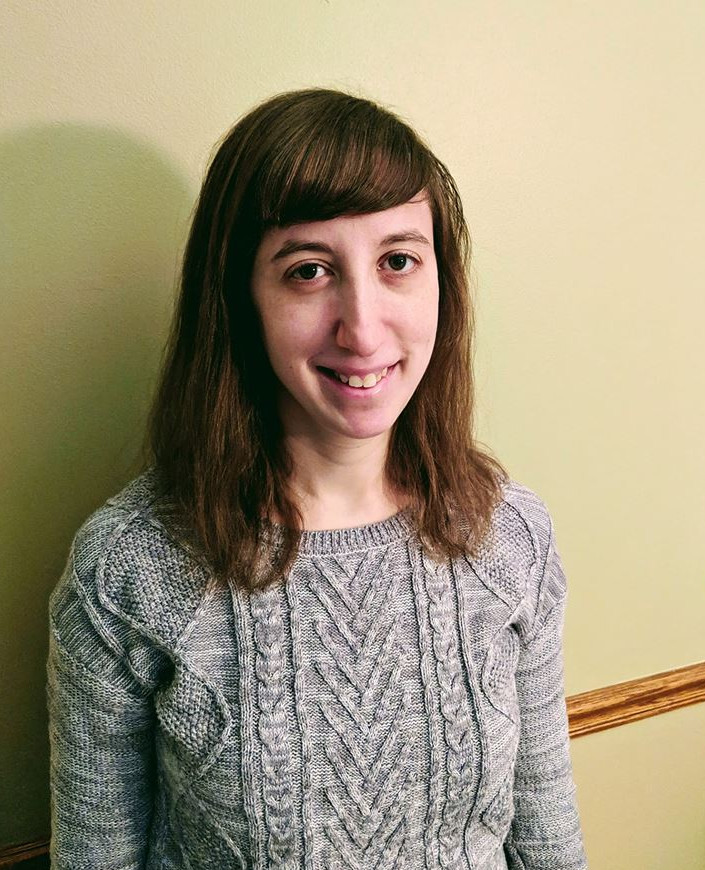
Rachel S. Cordasco’s fiction has appeared in Jersey Devil Press Magazine, Humour Me Magazine, SciFi Lampoon, The Creepy Podcast, Not One of Us, and Quotidian Bagatelle, and her translations of Italian science fiction have appeared in Clarkesworld, Samovar, Future Science Fiction Digest, World Literature Today, and elsewhere. Rachel’s first book about speculative fiction in translation is out from the University of Illinois Press and her second book on the same topic is forthcoming from the University of Wales Press.
.